
Prologue.
If someone would have asked me weeks, or even months, before this event if I could run a sub 3:50 marathon, the answer would have been a ‘No’. I have not been running before this event. I had better weekly mileage when I was training for a marathon. But no worries, it’s part of the plan.
“Can you hike Eastern States 100, with minimal and very slow running, and still finish?”
I can say now that you can, because I have done it.
The Plan.
Like I’ve said, I have not been running before this event. Don’t get me wrong. I did train for this event. I have been hiking, and doing other forms of training to prepare for this event.
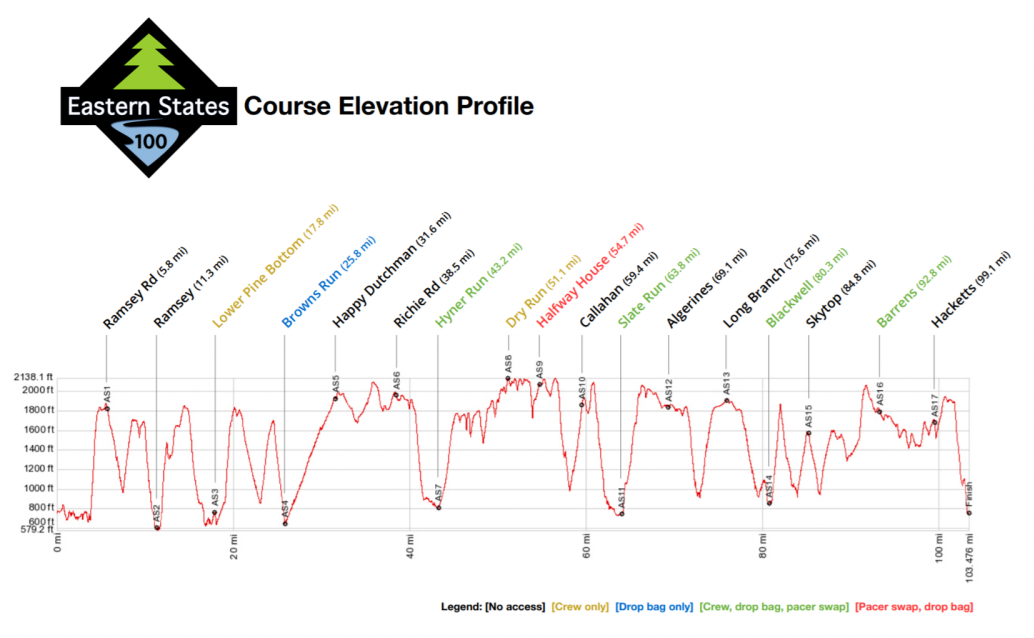
The event’s course elevation profile shows a lot of ups and downs, with a total elevation gain of over 20k feet. And if you’re not one of the mountain goats in the ultra running community, this means walking these ups and downs.
The event is actually over a hundred miles, 103 miles and change, with a 36 hour cutoff. Doing some calculations, you need to have an estimate average pace of 20min/mile to finish, including stops at the aid stations, nature calls, and other breaks. Under 20min/mile would be perfect.
Under 20min/mile – that’s the plan! And the approach is to do a fast-paced hike, with a little shuffling on the flats to offset the eventual loss of time on the ascents. And to make up more time on the descents. It’s only on the descents that I actually did some running. I am not fast on the descents either – just comfortable. The more technical the terrain, the more engaged and comfortable I become.
The Weather.
August is typically hot and humid. This is another factor why ES 100 is considered a difficult race. But not today. Race day weather was perfect. Not so hot, with manageable humidity. Zero chance of rain. Perfect for those gunning for personal records.
The Start.
The event started at 5am, Saturday, August 10th. It was nice to see some familiar faces at the start. The 1st mile was on the service road leaving the start at Little Pine State Park to the park campground, then about 2 miles before the first climb to the woods. I had my poles from the start. This was going to be one of my longest hikes ever.
The Early Miles.
Lower Pine Bottom @ mile 17.8, is the 3rd aid station, and the first where support crews were allowed. I have never done an event with my own support crew. This one was no different. Except that we have Ryan. He was Philip’s pacer, starting at mile 54. He unofficially crewed for us, Philip and I, at the earlier aid stations.
So, is there a difference having a crew vs without? Yes! The volunteers were already doing a tremendous job in helping the runners. But having someone you know, personally focused on just you, was a big morale booster. Ryan and Lea personally looked after me at Lower Pine Bottom aid station.
I don’t remember much details leading to Hyner Run aid station @ mile 43.2, except that true to what those who have done it have said – the 1st 30+ miles had the most technical sections of the course. I had more than 2 hour buffer when I reached the aid station, and still feeling good. Again, Ryan was there, providing dedicated help and support. I sat down, ate and sorted what I needed from my drop bag, while he filled my bladder and flasks with water and tailwind. Took my headlamp, garmin charger, plus some extra nutrition and off to the the continuation of this event.
I saw a cub crossed the trail just before the aid station. It then settled somewhere in the woods, still visible from the trail.
If I remember correctly, mile 43-51 is where the supposedly flattish and runnable section was. All the runners that I have passed on the earlier miles have passed me on this flattish section. I was hiking, they were running. It was ok. I stayed with my approach – hike fast, run slow, run less.
It was around 9:30 pm when I reached the Halfway House aid station @ mile 54.7. 2 hour buffer from the cutoff, and still feeling good. No down moments from the start to this point. Maybe because in my mind I was just hiking??? I changed clothes and put on my wind jacket at this aid station. Ryan and Janine saw me when I was about to leave. They were both waiting for their runners to arrive.
My already-slow pace has slowed down more after the aid station. It was nighttime hiking. I was waiting for a mantra to come to me. Nothing. I was touching and ‘talking’ to the trees as I passed them. It was a quiet and peaceful hike to Slate Run aid station @ mile 63.8.
I was surprised to see Ryan at Slate Run aid station @ mile 63.8. He was supposed to be pacing Philip starting at the Halfway House aid station. Did they pass me? No. He said Philip had to stop because of nutrition issues. He hitched a ride and waited for me at the aid station. He then became my pacer!
So, is there a difference having a pacer vs without? Yes! Having someone walking, or running, with you creates a more relaxed environment. He’s very familiar with this section of the course. And he knows everyone at the aid stations!
Hiking Half-Blind.
My eyes started to bother after mile 64. I was rinsing my face at every aid station, and putting on eye drops to combat the dryness and discomfort. Although at some point the eye drops were not helping that much. The eyes needed rest. I started to do some ‘walk-with-eyes-closed’ routine.
We reached Blackwell aid station @ mile 80.3, after sunrise. I missed enjoying the scenic views Ryan pointed to me before the aid station because I couldn’t really see well. My eyes were really hurting now. Well, it’s only 20+ miles to the finish. Like the reminder on events like this, HTFU and continue. A few more climbs here and there, none technical, and it’s a finish. I still had close to 2 hour buffer from the cutoff.
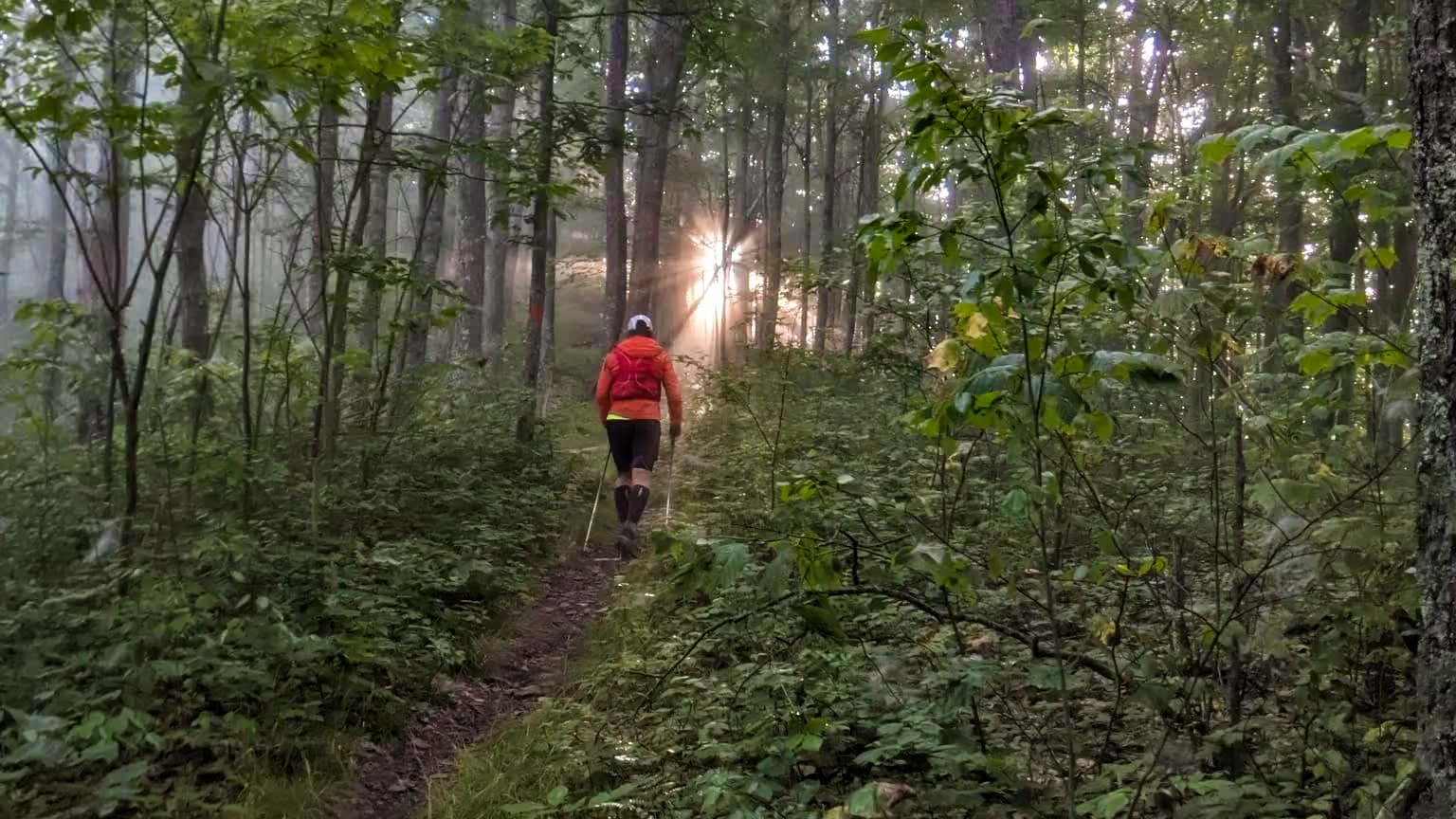
It was a long climb after leaving the aid station, with a very nice view at the top. I didn’t know that Ryan had his phone with him. I would have asked him to take a picture of that view – a partially cloud covered summit! It was like a floating mountain. At least that’s how I pictured it.
Barrens aid station @ mile 92.8 – the last aid station with the drop bags. I unloaded some stuff from my gear and changed to a more comfortable sleeveless shirt. Only 10 miles to go, still with good buffer on the cutoff. But I reminded myself, “I am not out of the woods yet”. Don’t lose focus and just keep going. Still at that same hiking pace. Still touching and ‘talking’ to the trees. Still with eyes hurting and walking half-blind.
There’s a small aid station at mile 99, a small climb, and a very technical descent going to the finish. Some events would have a nice relaxed last miles to the finish. Not this one. The last descent was, indeed, technical. Add the fatigue factor, and it’s no walk in the park. And the rattle snake den! They said it’s off the trail. Yeah, by about 3 feet, I would say.
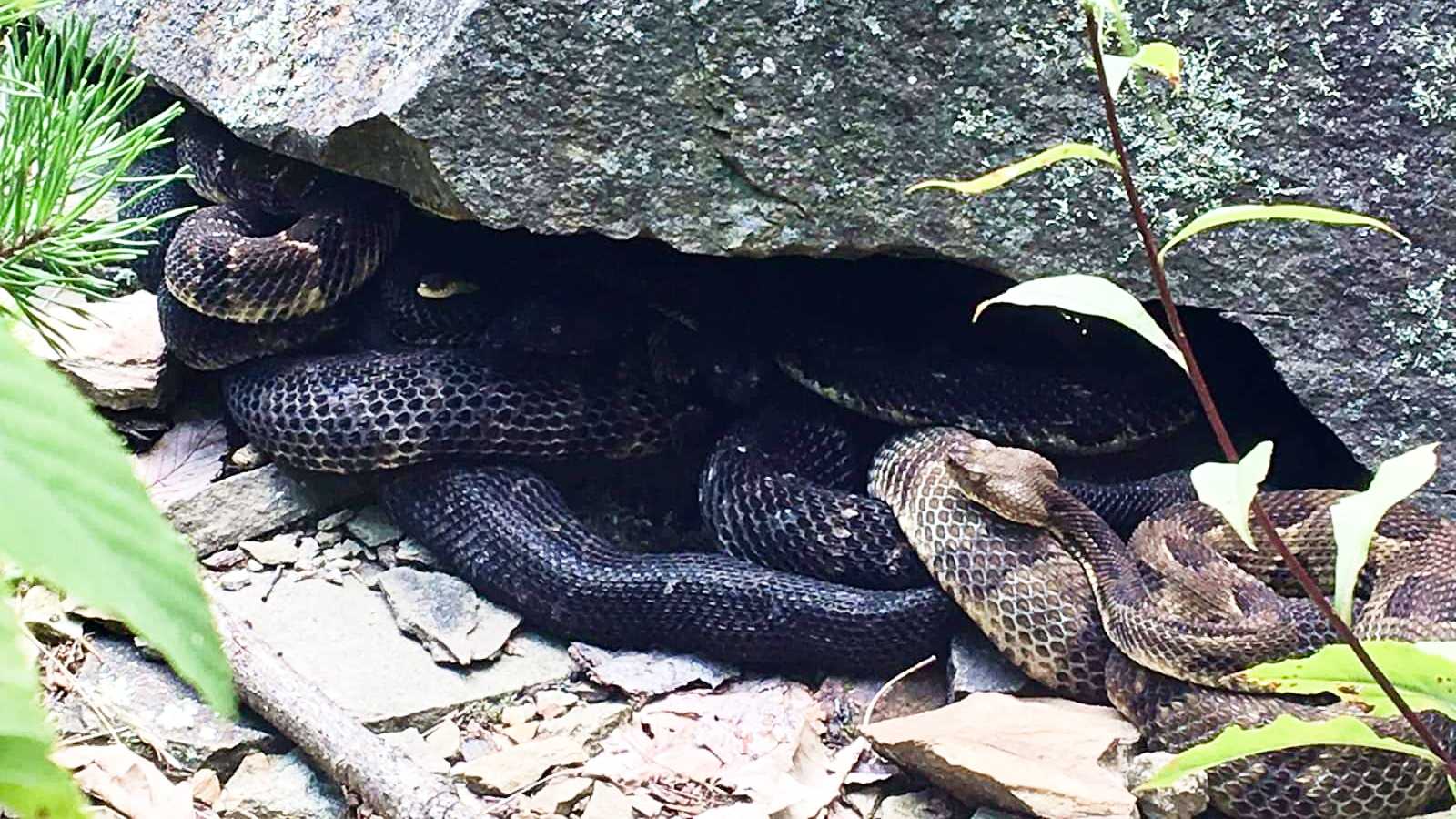
After the technical descent was the last quarter mile to the finish. The sound of the crowd awakened every muscle in my body, rejuvenating the spirit. Should I sprint to the finish? Would it make a difference? Nah. It was simply time to cross the finish line with gratitude.
34+ hour hiking done. Buckle earned.
Thank YOU.
Epilogue.
What’s the most difficult part of the event? The 38-min drive to the hotel for the post-race stay! I was so tired and sleepy that my eyes were closing on their own. I had to stop 3 times on the side of the road, and rinse my face. I was praying hard just to get to the hotel without any accidents. Prayers heard – Thank You.


One thought on “Eastern States 100”